How Agentic AI and Vibe Coding Are Reshaping Software
The Rise of Agentic Coding and the ‘Vibe Shift’
The software landscape is undergoing a fundamental transformation driven by ‘agentic vibe coding’—a paradigm where non-technical operators utilize autonomous AI agents to build production-grade applications. Historically, software development was bottlenecked by engineering execution. Today, agentic tools have dramatically collapsed the cost and time required to write code, with organizations reporting engineering productivity gains of up to 50 percent. This shift redefines the human role from builder to supervisor. When execution is no longer the primary constraint, strategic judgment becomes the ultimate competitive advantage. Operators must transition from managing syntax to evaluating product-market fit. In this fast-evolving environment, maintaining contextual Relevancy is the key to creating tools that actually solve precise, real-world problems. Rather than focusing on how to code, leaders must master how to direct AI to build the right solutions. As software creation democratizes, the value moves upstream to those who can synthesize user needs. This democratization means that unique insights and domain expertise, rather than technical programming skills, now dictate market success.
Enterprise Moats vs. Self-Serve Disruption
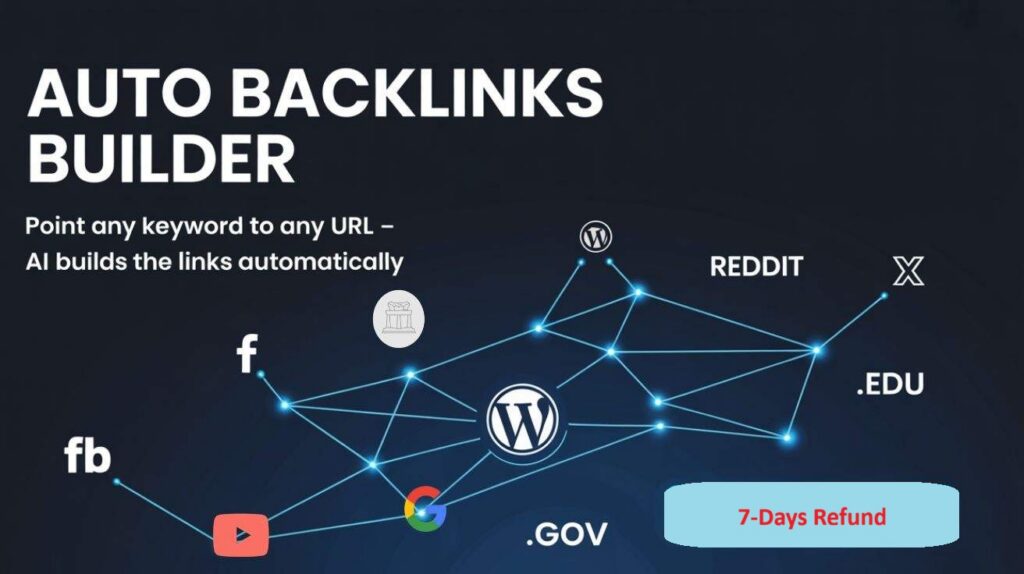
As custom software becomes effortless to generate, the market dynamics for existing software models are fracturing. Simple, self-serve applications face immediate pressure since users can easily spin up their own bespoke task managers. However, enterprise platforms remain highly resilient. Enterprise software is fortified by complex integrations, strict security standards, and legal accountability. An AI agent can optimize a database or write a patch, but it cannot assume legal liability when critical systems fail. Consequently, enterprise organizations are not replacing their core tech stacks; they are building custom AI layers on top of them. Simultaneously, this technology is revolutionizing digital marketing and distribution. For example, search engine optimization, which once required massive manual coordination, is becoming highly automated. Modern operators are deploying tools like an Auto Backlinks Builder to systematically scale their off-page authority while utilizing agents to audit technical health. The defensive moat for modern software vendors is no longer just the code itself, but the ecosystem of trust, uptime, and compliance they guarantee to corporate buyers.
Actionable Strategies for the New Software Era
To thrive in this agent-driven economy, businesses and professionals must overhaul their operational playbooks. First, recognize that user interfaces are losing their leverage as users increasingly interact with data through custom-built dashboards and agents. To counter this, companies must focus on acquiring and securing proprietary data assets that AI cannot replicate. Second, lean into smart automation for content creation and discovery. Implementing an AI Content Aggregator allows brands to automatically synthesize vast pools of market intelligence, ensuring they remain authoritative voices without drowning in manual research. Finally, shift your hiring and budgeting metrics away from execution volume. Measure team success by the quality of their strategic decisions and their ability to orchestrate multiple AI systems. The actionable takeaway for modern operators is clear: stop spending time on repetitive development tasks. Use agents to build your prototype applications, automate your analytical reporting, and focus your human capital on creative direction, positioning, and relationship building. Ultimately, the winner of this technological shift will be the one who directs the AI with the highest degree of precision and strategic foresight.