Explaining Link Building ROI Beyond Rankings: AWISEE’s Framework
Why Keyword Rankings Are an Incomplete Measure of Link Building
For many clients, link building success comes down to one question: did the target keyword move up? That expectation is understandable, but it misreads how links actually work. A link is a signal and a discovery path, not a switch. Search engines must crawl, index and evaluate a new link, and then re-score the page it points to, a process that can take months. AWISEE, a link building provider that says it has placed more than 4,600 live links across 35-plus markets since 2018, argues that agencies should stop treating position as the primary proof of value.
Several terms help frame that conversation. A referring domain is a unique website linking to your site, which matters more than raw link count because a hundred links from one site count far less than one link each from a hundred unrelated sites. Domain Rating (DR) is a third-party authority score from tools such as Ahrefs; it is a useful comparison metric but not something Google uses directly. Indexation confirms that a search engine has actually stored the linking page, and a link on an unindexed page delivers little.
Rankings also move for reasons unrelated to outreach. Content edits, technical fixes, algorithm updates and competitor activity can all shift position. Rank tracking adds noise of its own, since results vary by location, device and personalization. A client checking a keyword on their phone may see a different result than the agency’s dashboard. Without context, a flat ranking line can look like failure when the underlying campaign is working.
A Three-Level Reporting Model and the AI Search Problem
AWISEE’s proposed structure separates reporting into three layers. The first covers link quality: volume, relevance, authority metrics, real traffic to the linking site, and confirmation that each link is live and indexed. The second covers SEO impact: impressions and clicks from Search Console, performance across keyword groups rather than single terms, and referring domain growth benchmarked against competitors. The third covers business impact: organic conversions, the value of referral traffic, and cost per link compared with cost per acquisition from other channels.
The framework gains urgency from changes in search results. AI Overviews, the generated summaries that appear above conventional listings, can reduce the clicks that a top ranking once delivered. AWISEE cites Ahrefs research showing that the top organic page’s average click-through rate is roughly 58% lower when an AI Overview appears. Other studies point in the same direction but use different methods. Seer Interactive reported a 61% drop on queries showing AI Overviews, while a Pew Research analysis found a smaller gap, and Google has disputed that methodology. The honest takeaway is that the direction of the effect is consistent even though the exact size is debated.
The guide also recommends tracking AI citations in tools such as ChatGPT, Perplexity and Gemini. Those measurements are inconsistent across vendors, so they should be presented as directional trends, not precise scores.
Practical Steps for Agencies and In-House Teams
Start by agreeing on success metrics before any outreach begins. Write down which referring domain targets, impression goals and conversion events matter, and set a realistic review window. For most campaigns, the first links can appear within one to two weeks, but meaningful ranking movement often takes three to six months. A monthly report that shows only positions will almost always disappoint during that period.
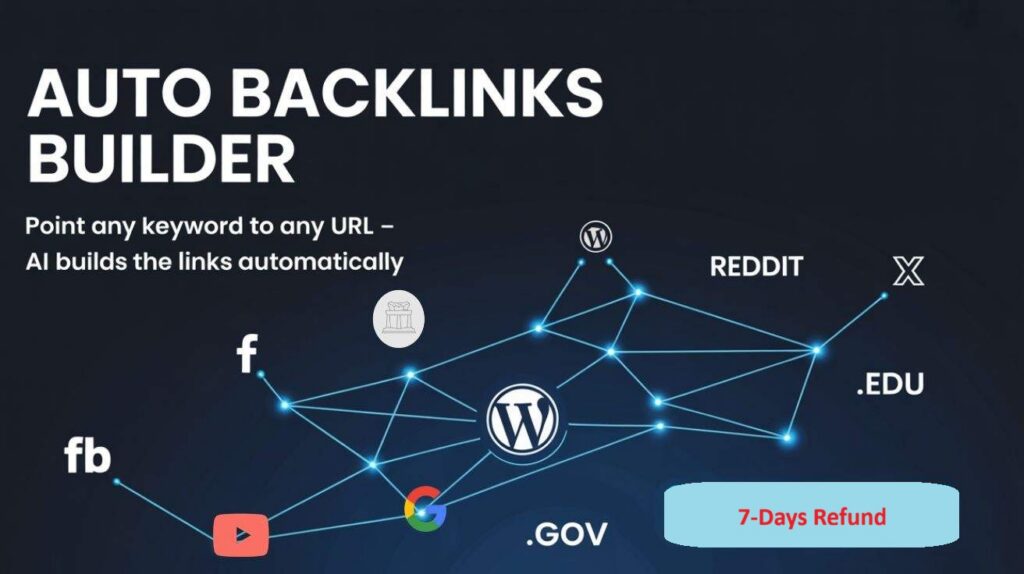
Next, build a standard report template with the three levels. Include a short annotation explaining each change, such as a content update or a competitor’s surge in referring domains. Automation can help with the mechanical parts. An auto backlink tool can speed up link discovery and monitoring, but every placement still needs a manual check for relevance and quality. Similarly, an AI content generator can draft outreach emails or article outlines, yet those drafts need editing to reflect the real publisher and audience. For client decks, an AI Post Images Generator can produce simple visuals, though charts built from verified data are usually more persuasive than decorative graphics.
Finally, keep compliance in view. Google’s spam policies treat links created mainly to manipulate rankings as spam, and paid links are acceptable only when properly marked as sponsored or qualified. Buying cheap, unrelated placements to hit a volume target is the fastest route to a penalty and a much harder conversation with the client.