SEO’s Role in Scaling ROI as Search Moves to AI
Why Organic Search Is Becoming a Growth Asset, Not a Line Item
Search engine optimization is often budgeted like an expense: spend this month, measure the traffic, repeat. A more useful way to think about it is as digital equity. A well-ranked page keeps earning visibility long after the work that produced it is finished, which is why many growth teams now treat organic search as something closer to an appreciating asset. Paid advertising works differently. A pay-per-click campaign delivers visibility while the budget flows and stops the moment spending does.
This difference matters because customer acquisition costs keep rising. Cost-per-click prices on major ad platforms have climbed in many industries, so every dollar of paid traffic buys a little less than it did before. Organic visibility reduces that dependency. The reporting behind this discussion cites an average close rate of 14.6 percent for leads generated through organic search, compared with roughly 1.7 percent for outbound methods such as cold calling or print advertising. Those figures come from industry commentary rather than a controlled study, so treat them as a directional benchmark. Still, the logic holds: prospects who find you while actively searching usually arrive with more intent than people interrupted by an ad.
For readers, the practical takeaway is to audit your budget by asking which channels would keep producing results if spending stopped tomorrow. The answer usually points toward content, technical health, and authority-building work.

Generative Engine Optimization and the Shift to AI-Driven Discovery
Search is changing shape. Alongside ranked links, users now get synthesized answers from AI overviews, chat-style assistants, and large language models. Generative Engine Optimization, often shortened to GEO, is the practice of structuring content so these systems can find, trust, and cite it. It builds on traditional SEO rather than replacing it, because AI tools still rely heavily on the same underlying signals: crawlable pages, clear topical focus, and credible sources.
In practice, GEO rewards content that is easy to extract and verify. Pages with direct answers near the top of a section, clean heading hierarchies, accurate statistics with named sources, and structured data tend to be easier for machines to interpret. Authorship and first-hand expertise also matter more when a model is deciding which sources to quote. A vague article that repeats common knowledge is less likely to be cited than a page that offers specific methods, original examples, or clearly explained data.
The risk is overpromising. No one can guarantee placement inside AI-generated answers, and these systems change frequently. A sensible approach is to strengthen fundamentals (accuracy, structure, expertise) rather than chase a single formula. Teams experimenting with an AI content generator or an AI Post Images Generator should keep human editors in the loop. Generated text that is generic, unverified, or duplicated across sites can weaken the credibility signals GEO depends on.
Timelines, Local Wins, and Avoiding Shortcuts
Set expectations carefully. Initial technical indexing and early ranking movement often appear within three to six months, while meaningful ROI and compounding traffic typically arrive between six and twelve months. The exact pace depends on domain authority, how crowded the niche is, and how quickly optimized content gets published. A newer site in a saturated market will take longer than an established local business targeting specific neighborhoods.
Local search is the fastest lever for many businesses. Claiming and maintaining a Google Business Profile, earning consistent citations in local directories, and responding to reviews can influence visibility for “near me” queries, which often carry strong purchase intent. Those queries can produce revenue sooner than broad informational content, even while the wider domain builds authority over time.
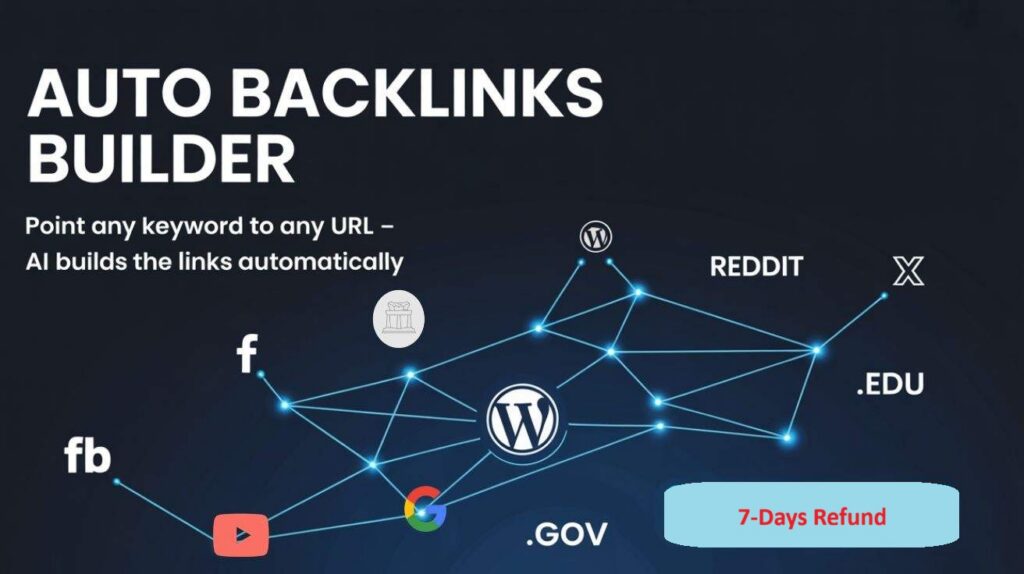
Backlinks deserve particular caution. An auto backlink tool can promise quick link volume, but low-quality or irrelevant links can trigger penalties or simply add noise. Earned links from relevant, reputable sites are worth far more than bulk placements. Use automation for research and outreach tracking, not for mass-producing links. Measure success by rankings for priority terms, qualified leads, and conversion rate, not by raw link counts. Treated as a long-term investment with disciplined execution, SEO can become one of the most durable parts of a growth strategy.