57% of Search Experts Dropped ‘SEO’: What the Shift Means
What the Report Found and Why the Vocabulary Is Changing
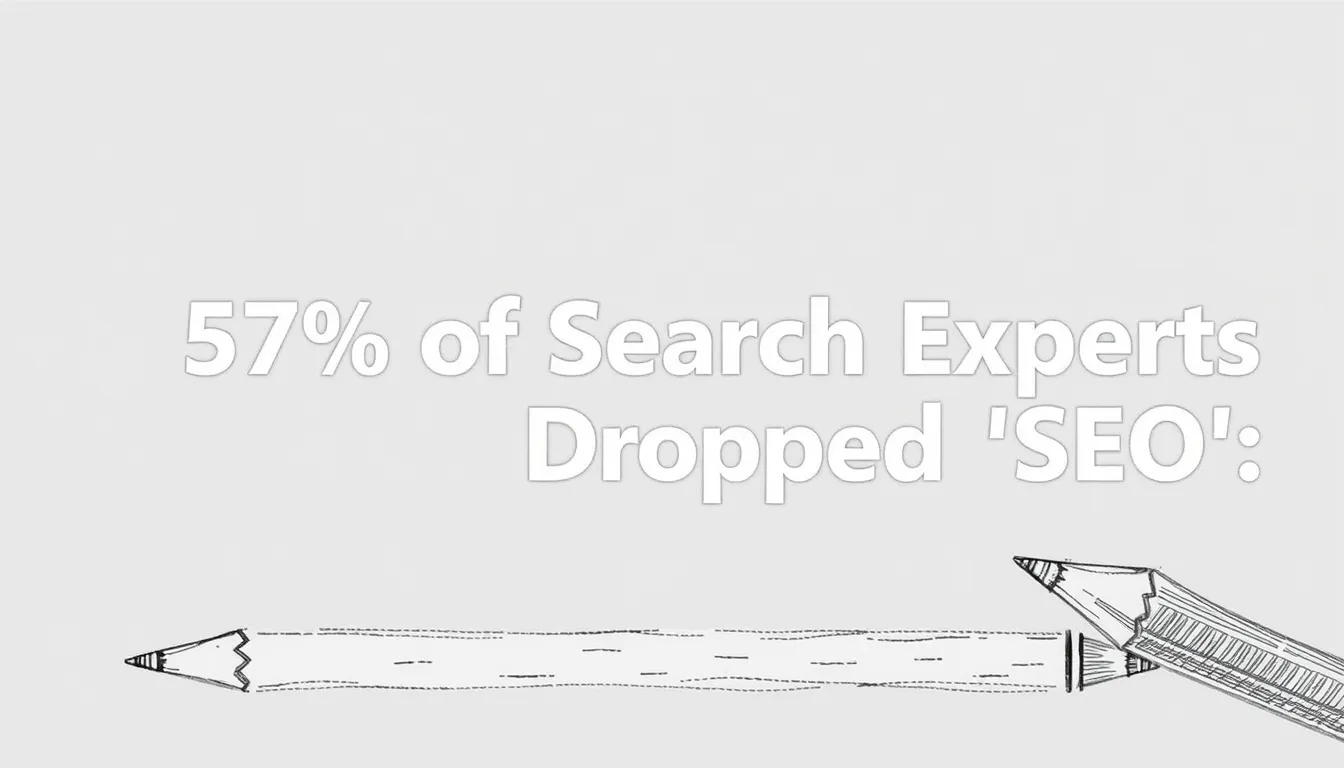
A new report, covered by Performance Marketing World, finds that 57% of search marketing professionals have stopped using the term ‘SEO’ in their day-to-day vocabulary. The finding describes a change in language, not necessarily a change in the work. Search engine optimization traditionally means improving a website’s visibility in unpaid search results by making pages crawlable, relevant, authoritative and useful. That core job still exists, but the surrounding terminology is multiplying. Practitioners now talk about answer engine optimization (AEO), which focuses on getting content cited in direct answers, and generative engine optimization (GEO), which targets visibility inside AI-generated responses from tools such as Google’s AI Overviews, Microsoft Copilot, ChatGPT and Perplexity. Some teams prefer broader labels such as ‘organic growth’ or ‘content visibility’ because they cover search engines, AI assistants and social discovery in one remit. Understanding these terms matters because the labels shape budgets, job titles and how clients search for help. A procurement manager who once typed ‘SEO agency’ may now type ‘AI search’ or ‘generative search optimization.’ The report itself does not quantify budget or methodology changes, so the 57% figure is best read as evidence of shifting sentiment and positioning inside the profession.
Benefits, Risks and Competing Perspectives
Supporters of the shift argue that the SEO label has become a liability. Many clients still associate it with keyword stuffing, low-quality link schemes and guaranteed rankings, so dropping the term can help professionals signal modern, quality-focused work. A new label can also reflect real changes in how people find information. When an answer appears above the ten blue links, or an AI assistant summarizes several sources, the success metric shifts from ranking position toward citations, brand mentions and assisted conversions. Skeptics see a different picture. Critics note that the fundamentals have not disappeared: crawlability, clean site architecture, strong content and credible authority still determine who gets surfaced, whether by a traditional index or a language model. They warn that constant rebranding can confuse executives who already struggle to understand search, and that new acronyms may be marketing rather than methodology. There is also a measurement risk. If teams adopt AEO or GEO language without defining metrics, they may report impressions or mentions that are hard to tie to revenue. The most balanced view is that terminology can evolve while the discipline’s core standards stay constant. Agencies that explain what they measure, and why, tend to earn more trust than those that simply swap one buzzword for another.
Practical Steps for Marketers, Agencies and Buyers
For in-house marketers, start with an audit of your own language. Review job descriptions, dashboards, board decks and service pages to see where ‘SEO’ appears and whether the term helps stakeholders understand the work. If your executives respond better to ‘organic visibility,’ use it, but define it in your reporting so the meaning stays clear. Agencies should map their service names to the terms buyers actually search for, while keeping technical depth visible in case studies and proposals. Buyers should ask vendors concrete questions: How do you measure visibility across traditional search and AI answer engines? Which metrics tie to pipeline? What specific technical and content work will you deliver in the first ninety days? Tooling deserves the same scrutiny. An AI content generator can speed up outlines and first drafts, and an AI Post Images Generator can create visuals for social posts, but both need human editing for accuracy, brand voice and originality. An auto backlink tool can look like a shortcut, yet automated link acquisition often produces low-quality or irrelevant links that search engines may devalue or penalize under spam policies. Earning links through useful research, original data and genuine partnerships remains the safer long-term approach. Whatever label you choose, judge it by the outcomes it helps you deliver.