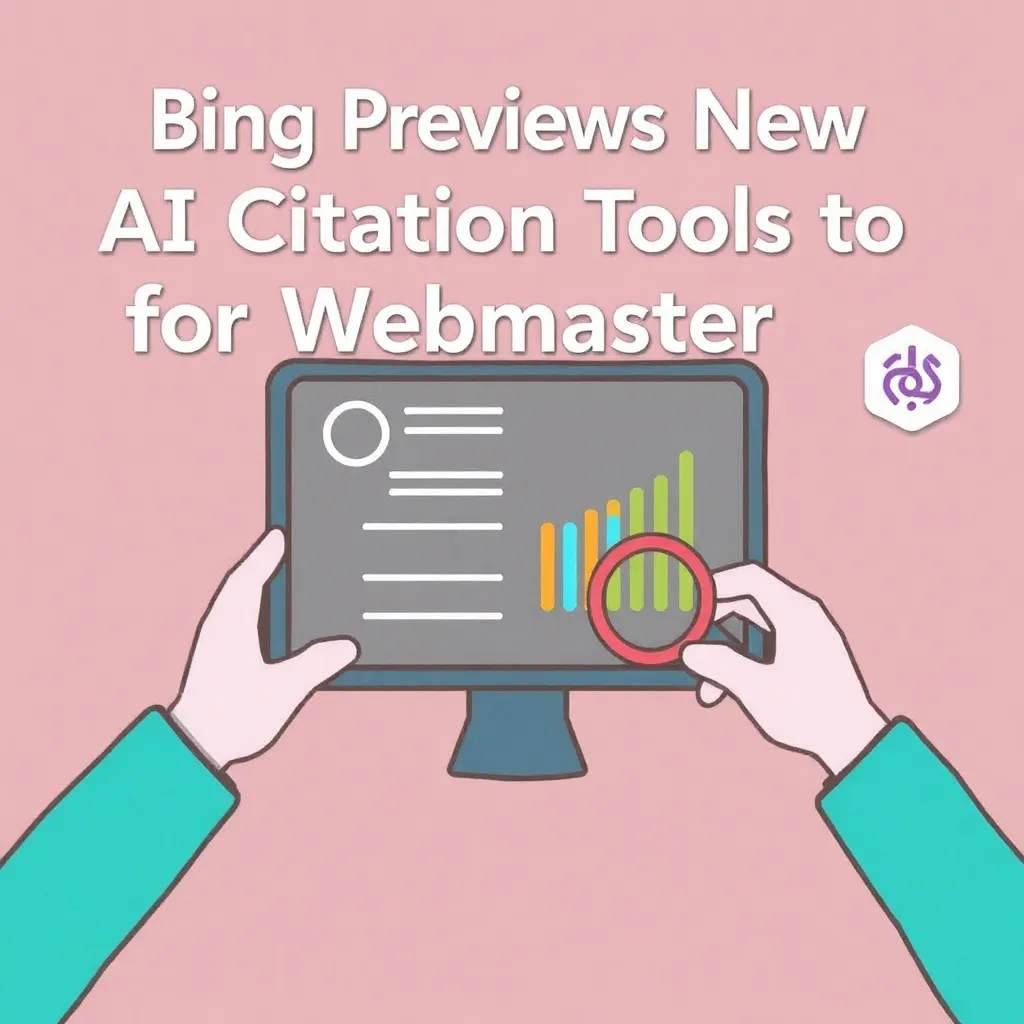
Bing Previews New AI Citation Tools for Webmaster Dashboard
Microsoft Introduces Advanced AI Performance Metrics
Microsoft has unveiled four innovative features for Bing Webmaster Tools during a recent SEO Week presentation in New York City. These additions focus on enhancing the AI Performance dashboard with more sophisticated tracking capabilities. The new Citation Share feature will display the percentage of citations a website captures within specific search queries, providing competitive context beyond basic citation counts. This advancement represents a significant step forward in AI tools integration, allowing webmasters to better understand their content’s performance in AI-generated search results. The features include grounding query classifications and Generative Engine Optimization recommendations, marking Microsoft’s commitment to providing comprehensive analytics for the evolving search landscape dominated by artificial intelligence.
Enhanced Query Classification and Topic Grouping
The upcoming features include sophisticated query classification systems that will revolutionize how websites analyze their AI visibility. Grounding Query Intent will categorize searches into 15 predefined labels including Learning, Informational Search, Navigational, Research, and Comparison queries. Additionally, Grounding Query Topic will provide a secondary classification layer, grouping queries under relevant topic categories. These improvements address current limitations where varied query phrasing makes trend identification challenging. By implementing an AI Content Aggregator approach, websites can now gauge their visibility against broader categories rather than individual search phrases. This enhanced classification system will enable more strategic content planning and help identify opportunities for improved AI search performance across different user intent types.
GEO Recommendations and Future Implementation
The fourth major addition focuses on Generative Engine Optimization recommendations, providing targeted guidance for improving AI search visibility. These recommendations cover essential areas including content structure optimization, crawlability improvements, indexing signals, canonicalization, and structured data implementation. While specific details remain limited, the feature appears to function similarly to an Auto Backlinks Builder by automatically identifying optimization opportunities. Microsoft has not yet announced official release dates for these features, and comprehensive documentation is still pending. Website owners should monitor official Microsoft channels for updates on availability and implementation guidelines. These tools represent the future of SEO analytics, where traditional optimization meets AI-powered search technologies to create more effective digital marketing strategies.